
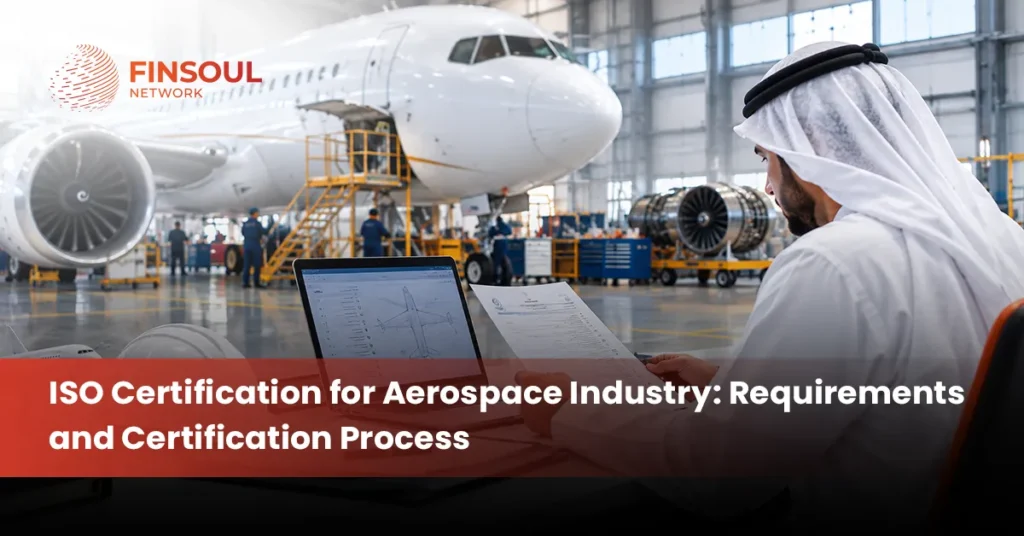
ISO certification for aerospace industry organisations provides a structured approach to quality management across aviation, space and defence operations. Aerospace businesses work with highly regulated products, complex supply chains and strict customer requirements, making consistent quality control essential. The IAQG 9100-series standards build on ISO 9001 and introduce additional requirements specifically designed for aviation, space and defence organisations.
For aerospace manufacturers, maintenance providers, component suppliers and distributors, certification can demonstrate that quality processes operate in a controlled and systematic manner. It also helps organisations establish stronger controls for risk, traceability, product safety, suppliers, nonconformities and operational performance.
Finsoul Network Kuwait provides professional quality assurance services to help businesses assess their existing quality systems, identify gaps and prepare for applicable certification requirements. Our support focuses on practical implementation so organisations can develop quality processes that work effectively in their day-to-day operations.
What Is ISO Certification for the Aerospace Industry?
Aerospace certification refers to certification against an applicable standard from the IAQG 9100-series. These standards use ISO 9001 as their foundation while adding requirements relevant to the specific needs of aviation, space and defence organisations. The main standards include AS9100, AS9110 and AS9120. AS9100 generally applies to organisations involved in the design, development, production and supply of aviation, space and defence products and services. AS9110 addresses aviation maintenance organisations, while AS9120 focuses on distributors.
Therefore, businesses should identify the correct standard before beginning certification preparation. The appropriate choice depends on the organisation’s activities, products, services and position within the aerospace supply chain. Certification also involves an independent assessment. A certification body evaluates whether the organisation has established, implemented and maintained a quality management system that meets the requirements of the applicable standard.
Which ISO Standards Apply to the Aerospace Industry?
Different aerospace organisations require different quality management standards. Selecting the correct standard is one of the first steps in the certification process.
AS9100 for Aerospace Quality Management
AS9100 is the primary quality management standard for many organisations operating within the aviation, space and defence supply chain. It is suitable for businesses involved in areas such as design, manufacturing, production, assembly and supply of aerospace-related products and services.
The standard incorporates ISO 9001 requirements and adds aerospace-specific controls. These additional requirements address areas such as product safety, operational risk, configuration management, supplier controls and other aspects that support reliable aerospace operations.
AS9110 for Aerospace Maintenance Organisations
AS9110 is designed for organisations that perform aviation maintenance activities. Maintenance providers need strong controls over inspection, servicing, repair, documentation and other activities that can affect aircraft reliability and safety.
The standard provides a quality management framework that reflects the specific requirements of aviation maintenance operations.
AS9120 for Aerospace Distributors
AS9120 applies to distributors that handle aviation, space and defence products and materials. Distributors play an important role in maintaining product integrity throughout the supply chain.
The standard addresses controls related to purchasing, storage, product identification, traceability, preservation and distribution. These controls help ensure that products remain identifiable and meet applicable requirements throughout the distribution process.
What Are the Key Aerospace ISO Certification Requirements?
Aerospace certification requirements cover more than general quality control. Organisations must establish processes that control operational risks and consistently meet customer and regulatory requirements.
Quality Management System Requirements
The organisation needs a clearly defined quality management system covering its certification scope. Processes, responsibilities, objectives and controls should be established according to the organisation’s activities.
Senior management should demonstrate commitment to the quality system and ensure that employees understand the requirements applicable to their roles.
Risk Management Requirements
Risk management is an important part of aerospace quality management. Organisations should identify risks that could affect product conformity, delivery, customer requirements and operational performance.
Risk considerations should form part of business planning, production, purchasing, supplier management and other relevant processes rather than remaining limited to a standalone risk register.
Product Safety Requirements
Product safety receives significant attention in aerospace operations because failures can have serious consequences. Organisations need appropriate processes for identifying, assessing and controlling product safety risks.
Employees should understand their responsibilities for safety-related activities and know how to escalate concerns when required.
Supplier Management Requirements
Aerospace organisations often depend on external suppliers for materials, components and specialist services. Effective supplier controls are therefore necessary.
Businesses should establish processes for supplier selection, evaluation, monitoring and performance review. Supplier performance should be assessed against applicable quality, delivery and contractual requirements.
Traceability and Configuration Control
Traceability enables organisations to establish the history, origin, status or location of products and components where applicable.
Configuration management helps maintain consistency between approved designs, specifications, products and associated technical information. Effective controls reduce the possibility of using outdated or incorrect documentation.
Nonconformity and Corrective Action
Organisations need a controlled process for identifying and managing nonconforming products and processes.
Corrective action should address the root cause of a problem rather than only correcting the immediate issue. Businesses should also evaluate whether similar problems could exist elsewhere.
Internal Audit Requirements
Internal audits allow organisations to evaluate whether their quality management system meets applicable requirements and operates effectively.
Audits should cover relevant processes and consider risk, previous findings and operational importance. Findings should be recorded and addressed through suitable corrective action.
Who Needs ISO Certification in the Aerospace Industry?
Aerospace certification can apply to many organisations involved in the supply chain. These may include aircraft component manufacturers, aerospace product manufacturers, design organisations, maintenance providers, distributors and specialist service providers.
The applicable standard depends on the organisation’s role. AS9100 is generally relevant to aviation, space and defence organisations, AS9110 addresses maintenance activities, and AS9120 applies to distributors.
Certification may also become commercially important when major aerospace customers require suppliers to demonstrate compliance with recognised quality management standards. Although certification is not automatically a legal requirement for every aerospace business, customer and supply-chain requirements can make it an important business consideration.
What Documents Are Required for Aerospace ISO Certification?
The required documentation depends on the organisation’s activities, certification scope and applicable standard. Typical documented information may include the quality policy, quality objectives, process documentation, risk assessments, supplier evaluation records, inspection records, training records and internal audit reports.
Organisations may also need documented controls for nonconforming products, corrective action, configuration management, product safety and other relevant processes.
Documentation should reflect actual business operations. Creating large amounts of paperwork without implementing the related processes does not establish an effective quality management system.
What Is the Aerospace ISO Certification Process?
The iso certification for aerospace industry involves several stages. Organisations should approach certification as a structured improvement programme rather than a document preparation exercise.
Select the Applicable Aerospace Standard
The first step is determining whether AS9100, AS9110 or AS9120 applies. The decision should reflect the organisation’s actual activities and supply-chain role.
Conduct a Gap Analysis
A gap analysis compares existing systems and processes with the requirements of the applicable standard. It identifies missing procedures, weak controls, documentation gaps and implementation issues.
This assessment provides a practical roadmap for certification preparation.
Develop the Quality Management System
The organisation should develop or improve its quality management system based on the results of the gap analysis.
Processes should define responsibilities, controls, monitoring methods and required records. The system should remain practical and aligned with actual operations.
Implement Required Procedures and Controls
The next stage involves putting the documented processes into practice. Employees should understand their responsibilities and follow approved procedures consistently.
The organisation should retain appropriate records as evidence that the processes are operating effectively.
Conduct Internal Audits
Internal audits should take place before the external certification audit. They help identify weaknesses and provide management with an opportunity to correct problems.
Auditors should assess processes objectively and document any findings that require action.
Complete Management Review
Management should review the performance and effectiveness of the quality management system. The review can consider audit findings, quality objectives, customer feedback, risks, nonconformities and improvement opportunities.
Select a Certification Body
The organisation should select an appropriate certification body capable of conducting the relevant aerospace certification assessment.
IAQG operates a recognised certification scheme for the 9100-series through qualified third-party certification bodies.
Complete the Stage 1 Audit
Stage 1 evaluates the organisation’s readiness for the certification assessment. The auditor reviews the quality management system, documented information, scope and preparedness for Stage 2. Any significant readiness concerns should be addressed before the next stage.
Complete the Stage 2 Audit
Stage 2 is the detailed assessment of implementation and effectiveness. Auditors review records, processes and evidence to determine whether the quality management system meets the applicable requirements. Employees may be interviewed, operational activities may be observed, and documented evidence may be reviewed.
Correct Nonconformities
If auditors identify nonconformities, the organisation must investigate their causes and implement appropriate corrective action. The organisation should maintain evidence demonstrating how each issue was addressed and, where required, how the effectiveness of corrective action was verified.
Receive Certification
After successful completion of the certification process and resolution of applicable findings, the certification body can issue the certificate for the relevant standard and scope.
What Happens During the Stage 1 Audit?
The Stage 1 audit primarily examines readiness for the full certification assessment. Auditors review the organisation’s quality management system and relevant documented information. They may examine the defined certification scope, process structure, internal audit arrangements and management review activities. Stage 1 gives the organisation an opportunity to identify significant preparation issues before the detailed Stage 2 assessment.
What Happens During the Stage 2 Certification Audit?
The Stage 2 audit evaluates whether the quality management system has been implemented effectively. Auditors can review operational records, interview personnel, observe activities and assess processes against the applicable requirements. The organisation must demonstrate that its documented system reflects actual operations. Successful preparation therefore requires employee awareness, consistent process implementation and reliable records, not simply completed documents.
How Are Aerospace Audit Nonconformities Resolved?
When auditors identify a nonconformity, the organisation should determine what requirement was not fulfilled and investigate the underlying cause. Corrective action should address the root cause and prevent recurrence. Management should also consider whether the same weakness could affect other processes. The organisation must provide appropriate evidence of corrective action according to the certification body’s requirements.
How Long Does Aerospace ISO Certification Take?
The time required depends on organisational size, operational complexity, certification scope, number of sites and the maturity of the existing quality management system. A business with an established quality management framework may require less preparation than an organisation developing its system from the beginning. A gap analysis can help management estimate the preparation effort more accurately and establish priorities before approaching a certification body.
How Is Aerospace ISO Certification Maintained?
Certification requires ongoing management after the initial certificate is issued. Organisations need to continue operating their quality management systems and undergo surveillance assessments according to the applicable certification programme.
Businesses should continue conducting internal audits, management reviews, risk assessments and corrective actions. Changes to products, suppliers, processes, customers or organisational responsibilities should also be evaluated to determine whether quality controls require adjustment.
Maintaining the system consistently helps organisations remain prepared for surveillance and recertification assessments.
How Does Finsoul Network Kuwait Support Quality Assurance?
Finsoul Network Kuwait provides quality assurance services to organisations that want to strengthen their quality management systems and prepare for relevant certification requirements. Our services can include reviewing existing quality processes, identifying system gaps, assessing documentation, supporting internal audit preparation, and helping organisations understand areas that require corrective action.
For businesses preparing for iso certification for aerospace industry requirements, professional quality assurance support can make the preparation process more structured. We help businesses focus on practical implementation instead of treating certification as a documentation-only exercise. Our approach can also help organisations improve process consistency, establish stronger controls and prepare evidence required during certification assessments.
Conclusion
The iso certification for aerospace industry requires careful planning, effective implementation, and ongoing quality management. Organisations need to identify the appropriate 9100-series standard, assess their existing systems, implement required controls, conduct internal audits and demonstrate effective performance during the certification assessment.
Strong preparation also helps businesses manage aerospace-specific areas such as risk, product safety, supplier performance, traceability, configuration control and corrective action.
Finsoul Network Kuwait provides quality assurance services to help organisations assess their systems, identify gaps and prepare for relevant quality management certification requirements. With structured support and effective implementation, businesses can establish quality systems that support both certification objectives and long-term operational performance.
Frequently Asked Questions
What ISO certification is required for aerospace companies?
The applicable standard depends on the organisation’s activities. AS9100 generally applies to aviation, space and defence organisations, AS9110 applies to aviation maintenance organisations, and AS9120 applies to distributors.
Is AS9100 based on ISO 9001?
Yes. The 9100-series uses ISO 9001 as its foundation while adding requirements designed specifically for aviation, space and defence organisations.
What is ISO certification for aviation and airline services?
iso certification for aviation and airline services can refer to certification against applicable management system standards used by organisations operating in aviation-related activities. The appropriate certification depends on the organisation’s services, operational scope and specific customer or regulatory requirements.
What is ISO certification for aviation industry businesses?
iso certification for aviation industry businesses involves selecting a suitable management system standard based on the organisation’s activities and demonstrating that the required processes are implemented and maintained effectively.
What happens during an aerospace certification audit?
The certification process generally includes Stage 1 and Stage 2 assessments. Auditors review documented information, implementation, records, processes and evidence demonstrating that the quality management system operates effectively.