
ISO Certifications for Construction Industry in Kuwait
Kuwait’s construction industry stands as one of the most active and economically significant sectors in the country. Driven by government-led infrastructure projects, urban expansion, and the Kuwait Vision 2035 development agenda, the sector continues to attract billions in public and private investment.
ISO certifications for construction industry play a critical role in helping companies meet international quality, safety, and environmental standards. From high-rise residential towers in Kuwait City to mega infrastructure corridors, the construction sector is shaping the modern Kuwaiti landscape. Finsoul Network Kuwait supports construction businesses across the country in achieving the certifications and compliance frameworks needed to compete and grow in this dynamic market.
Kuwait Construction Market Growth and Industry Trends
Kuwait’s construction market is experiencing sustained momentum, fuelled by large-scale government development programs and growing private sector participation. Projects such as Kuwait Metro, South Al-Mutlaa City, Al-Zour Refinery, and the Silk City initiative represent multi-billion-dollar commitments that are reshaping national infrastructure. ISO certifications for construction industry have become a baseline requirement for contractors seeking to qualify for government tenders and international partnerships.
The market is further supported by increased foreign investment, public-private partnership frameworks, and a growing demand for sustainable building practices. Contractors and developers are now prioritising operational excellence and compliance as competitive tools. The demand for iso certification for construction is growing at pace with project volumes, and businesses that invest in quality management systems consistently win more contracts, reduce project risks, and improve delivery timelines. Finsoul Network Kuwait helps companies navigate this process from start to finish.

Major Sectors Driving Kuwait's Construction Market
Kuwait’s construction sector covers a broad range of sub-sectors, each contributing to the country’s infrastructure and economic development goals.
Civil and Infrastructure Construction
Civil construction covers roads, bridges, tunnels, drainage systems, and public utilities. It forms the backbone of Kuwait’s national development plan and accounts for a significant share of public sector spending each year.
Residential and Commercial Building
This segment includes apartment complexes, villas, office buildings, and mixed-use developments. Growing urbanisation and housing demand continue to drive activity across Kuwait City and surrounding governorates.
MEP and Fit-Out Works
Mechanical, electrical, and plumbing works along with interior fit-out services represent a fast-growing segment. Specialist contractors in this space actively pursue ISO certifications for construction industry to strengthen their market positioning and meet client requirements.
Oil, Gas, and Industrial Construction
Kuwait’s hydrocarbon sector drives substantial construction activity in refineries, pipelines, petrochemical plants, and energy facilities. These projects demand strict alignment with iso standards for construction covering quality, safety, and environmental performance.
Green and Sustainable Construction
Sustainable building practices are growing in Kuwait, driven by government policy and global ESG commitments. Green construction focuses on energy efficiency, material sourcing, and environmental impact reduction aligned with ISO 14001 standards.
How Kuwait's Construction Industry Operates:
| Stage | Description |
|---|---|
Project Planning and Design |
Feasibility studies, architectural design, structural engineering, and budget planning are completed. Environmental and regulatory approvals are obtained from relevant authorities. |
Tendering and Procurement |
Contractors submit bids based on technical and financial criteria. Government entities evaluate compliance with quality and safety standards, including iso standards for construction, before awarding contracts. |
Site Preparation and Mobilisation |
Land clearing, temporary infrastructure setup, and workforce mobilisation take place. Health, safety, and environmental management systems are activated at this stage. |
Construction and Project Execution |
Core building work, civil works, MEP installation, and structural development are carried out according to approved designs, timelines, and quality benchmarks. |
Handover, Inspection, and Commissioning |
Final inspections, testing, snagging, and regulatory sign-offs are completed before the project is handed over to the client or end user. |
Kuwait’s construction sector follows a structured project lifecycle that involves multiple stakeholders, regulatory approvals, and operational phases.
Regulatory and Compliance Framework for Construction in Kuwait
Construction in Kuwait operates within a well-defined regulatory environment governed by multiple authorities. Compliance with these frameworks is essential for all contractors and developers. Finsoul Network Kuwait helps businesses navigate these requirements efficiently through structured iso consultancy construction support.
Oil, Gas, and Industrial Construction
Kuwait’s hydrocarbon sector drives substantial construction activity in refineries, pipelines, petrochemical plants, and energy facilities. These projects demand strict alignment with iso standards for construction covering quality, safety, and environmental performance.
Environment Public Authority (EPA)
The EPA regulates environmental impact assessments and construction waste management. An experienced iso certification consultant for construction helps companies align with EPA requirements through structured environmental management systems.
Kuwait Fire Service Directorate
Fire safety compliance is mandatory for all construction projects. The KFSD reviews fire protection system designs, conducts inspections, and issues approvals as part of the building completion process.
Kuwait Municipality
Kuwait Municipality regulates building permits, land use approvals, zoning compliance, and construction specifications for urban development. All residential and commercial projects require municipality clearance before construction begins.
Standards and Best Practices in Kuwait's Construction Industry
Construction companies operating in Kuwait are expected to align with internationally recognised standards. These frameworks improve project quality, reduce risk, and strengthen client confidence. Iso consultation for construction industries is the most effective route to implementing these standards across your organisation.
ISO 9001 is the foundational standard for quality management in construction. It ensures that processes, materials, and project delivery consistently meet client specifications and regulatory requirements across all project phases.
ISO 45001 is critical for construction sites where worker safety risks are high. It provides a structured framework for hazard identification, risk assessment, incident prevention, and emergency preparedness on active construction sites.
ISO 14001 helps construction companies manage their environmental responsibilities, including waste reduction, emissions control, and sustainable material use. It is increasingly required by clients and regulators for large-scale projects in Kuwait.
ISO 19650 — BIM and Information Management
ISO 19650 governs Building Information Modelling practices and digital project data management. It supports efficient collaboration, reduces project errors, and is becoming a standard requirement for major construction projects across the region.
Challenges Facing the Construction Industry in Kuwait
Kuwait’s construction sector faces several challenges that impact project delivery, profitability, and long-term growth. Understanding these challenges is the first step toward managing them effectively.
- Workforce and Labour Management: Construction in Kuwait relies heavily on expatriate labour. Managing large, diverse workforces while maintaining productivity, safety compliance, and labour law adherence presents ongoing operational challenges for contractors of all sizes.
- Project Delays and Cost Overruns: Bureaucratic approval processes, supply chain disruptions, and design changes frequently cause delays. These overruns impact contractor profitability and client satisfaction on major public and private projects.
- Regulatory Complexity: Multiple regulatory bodies from municipality permits to EPA approvals require significant time and expertise. Many contractors struggle to keep pace with evolving compliance requirements across project stages.
- Material Supply Chain Volatility: Global supply chain disruptions affect the availability and cost of construction materials. Price fluctuations in steel, cement, and MEP components create budget management challenges for contractors and project owners.
- Adoption of Technology and Digital Tools: Many construction firms in Kuwait are still transitioning from traditional project management methods to BIM, digital monitoring, and data-driven quality systems. The pace of adoption varies significantly across the industry.
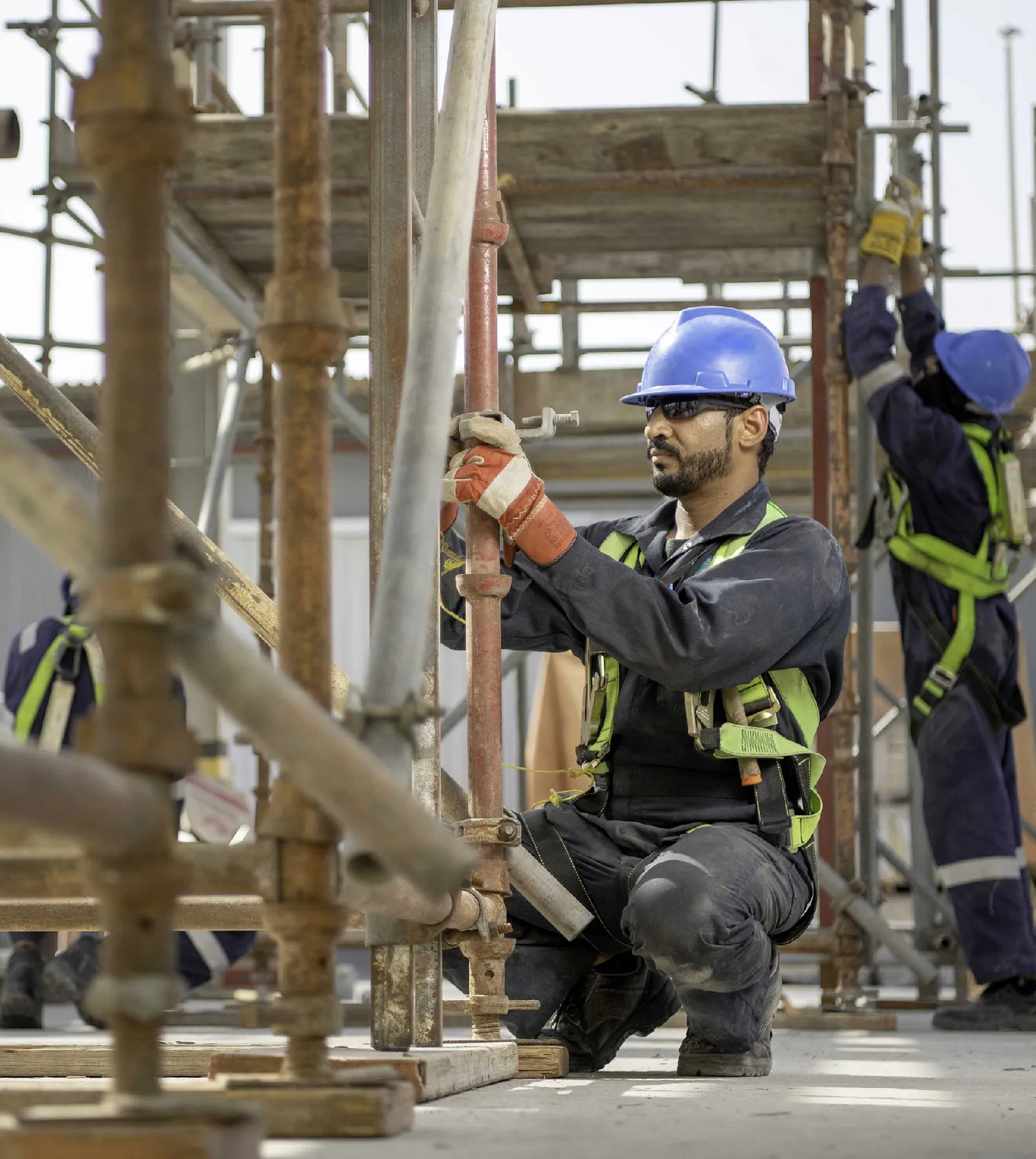
Opportunities in Kuwait's Construction Industry
Despite its challenges, Kuwait’s construction sector presents significant growth and expansion opportunities for businesses that position themselves effectively.
- Kuwait Vision 2035 Infrastructure Pipeline: The government’s long-term development plan includes massive investment in transport, housing, utilities, and smart city infrastructure. This creates a sustained pipeline of project opportunities for qualified contractors across all disciplines.
- Growing Demand for ISO for the Construction Industry: Government tenders and international clients increasingly require ISO-certified contractors. Businesses holding recognised ISO for the construction industry gain a clear competitive edge in bid evaluations and prequalification processes.
- Green Building and Sustainability Projects: Demand for environmentally responsible construction is rising. Contractors with ISO 14001 certification and green building expertise are well-positioned to capture this growing and high-value project segment.
- Oil and Gas Sector Expansion: KNPC and Kuwait Oil Company continue to commission new industrial and energy infrastructure. These projects require contractors with proven safety, quality, and environmental management systems in place.
- Technology Integration and Smart Construction: Early adoption of digital tools, BIM, and smart site monitoring opens new business opportunities and improves competitiveness for construction firms targeting premium project categories.

Technology and Innovation in Kuwait's Construction Industry
Digital transformation is reshaping how construction projects are planned, executed, and monitored in Kuwait. Companies that embrace innovation are building stronger competitive positions across the market.
| Technology | Industry Impact |
|---|---|
Building Information Modelling (BIM) |
BIM enables 3D project modelling, reduces design errors, improves collaboration between architects, engineers, and contractors, and aligns with ISO 19650 information management standards. |
Drone and UAV Site Monitoring |
Drones provide real-time aerial site surveys, progress monitoring, and safety inspections. They reduce manual inspection time and improve accuracy across large and complex construction sites. |
Project Management Software |
Cloud-based platforms enable real-time scheduling, resource tracking, cost control, and document management. They support quality management systems aligned with iso certification for construction companies requirements. |
Prefabrication and Modular Construction |
Off-site manufacturing of building components improves quality control, reduces waste, and shortens construction timelines. It supports compliance with quality standards and reduces on-site safety risks. |
IoT and Smart Site Sensors |
Connected sensors monitor structural integrity, environmental conditions, equipment performance, and worker safety in real time, supporting risk management and continuous improvement processes. |
Risk Factors in Kuwait's Construction Industry
Construction businesses in Kuwait face a range of risks that can affect project performance, financial stability, and long-term regulatory standing.
Contract and Legal Risk:
Disputes over contract terms, scope changes, and payment delays are common in Kuwait’s construction market. Without clear contractual frameworks, these issues can escalate into costly legal proceedings.
Subcontractor Performance Risk:
Many contractors rely on subcontractor networks. Poor subcontractor performance affects overall project quality, timelines, and the principal contractor’s compliance obligations and client relationships.
Health, Safety, and Liability Risk:
On-site accidents expose businesses to legal liability, regulatory penalties, and reputational damage. Maintaining ISO 45001-compliant safety systems is essential to manage this risk effectively.
Regulatory Non-Compliance Risk:
Failure to meet municipal, EPA, or ministry requirements can result in project stoppages, fines, or disqualification from future government contracts. Proactive compliance management through iso consultancy construction is critical.
Financial and Cash Flow Risk:
Construction projects often involve long payment cycles. Contractors managing multiple projects simultaneously face serious cash flow pressure, especially when client payments are delayed across project portfolios.
Future Outlook for Kuwait's Construction Industry
Kuwait’s construction industry is positioned for strong, long-term growth. The continued rollout of Vision 2035 projects, combined with increasing private sector investment and a growing focus on sustainable infrastructure, will drive sustained demand for construction services across the country. As international contractors and joint ventures enter the Kuwaiti market, local firms must elevate their quality, safety, and environmental management systems to remain competitive.
The adoption of ISO for construction industry will become standard practice rather than a differentiator. Finsoul Network Kuwait anticipates rising demand for certification support as businesses recognise compliance frameworks as core business tools rather than optional credentials.
Note: The above-mentioned services are provided via network firms if not provided directly
Economic Contribution of Kuwait's Construction Industry
Kuwait’s construction sector makes a substantial and direct contribution to the national economy. It generates employment for hundreds of thousands of workers, supports dozens of allied industries including materials, logistics, engineering, and MEP services, and drives demand across the broader private sector. The industry is a primary channel through which government capital expenditure reaches the wider economy.
As Kuwait continues to diversify beyond hydrocarbons in line with Vision 2035, the construction sector will remain a strategic pillar of economic transformation. Finsoul Network Kuwait is committed to supporting the industry’s growth by delivering expert iso certification consultant for construction services that help businesses compete, comply, and scale in a demanding market.
Achieve ISO Certifications for Construction Industry with Expert Guidance
Strengthen your construction business with internationally recognised standards for quality, safety, and environmental management. Finsoul Network Kuwait helps you achieve ISO certifications for construction industry requirements through practical consulting, complete documentation support, employee training, and audit preparation.
FAQs
What are ISO standards for construction?
ISO standards for construction are internationally recognised guidelines that help construction companies improve quality, safety, environmental management, and operational efficiency. They provide a structured framework for managing projects, reducing risks, and ensuring compliance with industry requirements.
Which ISO standards are most important for construction companies in Kuwait?
ISO 9001, ISO 45001, and ISO 14001 are the most widely required. Iso certification for construction companies in Kuwait typically pursue all three as a combined certification package managed by a single consultant.
What does an ISO certification consultant for construction actually do?
An iso certification consultant guides businesses through gap analysis, system documentation, staff training, internal audits, and certification body coordination from start to finish.
How often must a construction company renew its ISO certification?
ISO certifications are generally valid for three years, with annual surveillance audits conducted to ensure ongoing compliance with certification requirements.
Do subcontractors need ISO certification?
Although not always mandatory, many main contractors prefer working with ISO-certified subcontractors because they are more likely to follow structured quality, safety, and environmental management practices.
Can ISO certification improve a construction company's reputation?
Yes. ISO certification demonstrates professionalism, reliability, and commitment to international standards, helping construction companies build trust with clients, investors, and regulatory authorities.