
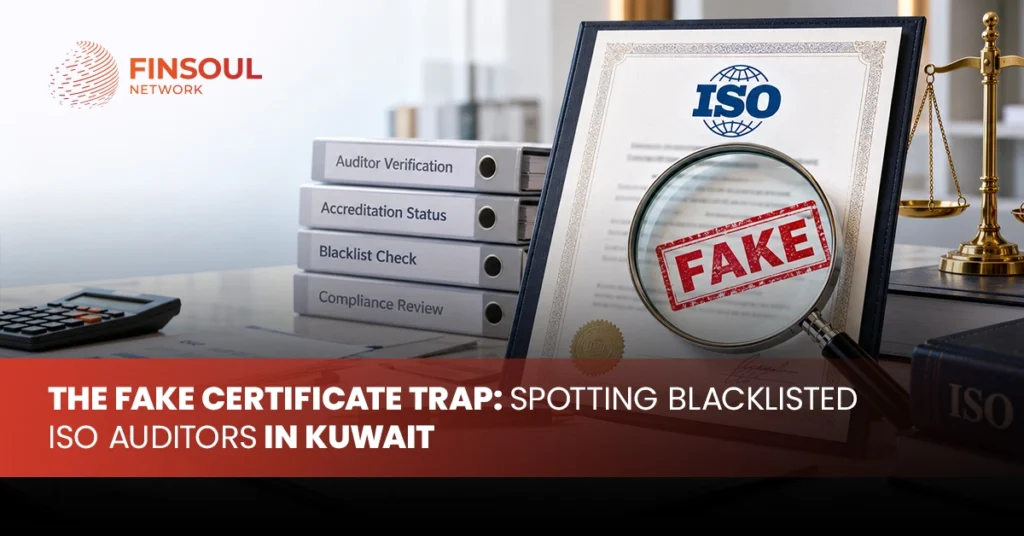
An ISO certificate can influence a supplier’s credibility, tender eligibility, and business relationships. However, a certificate with an official-looking logo does not automatically prove that an organisation has undergone a valid audit. Businesses in Kuwait should check the issuing certification body, confirm its accreditation where required, and verify the certificate before relying on it.
Choosing ISO Auditors in Kuwait requires more than comparing prices or accepting promises of quick certification. Businesses must understand who provides consultancy, who conducts the independent certification audit, and who has authority to issue the final certificate.
Finsoul Network Kuwait supports businesses preparing for ISO requirements through consultancy, documentation, and audit-readiness activities. Certification itself remains the responsibility of an independent certification body. Understanding this distinction helps businesses avoid misleading offers and make informed decisions.
What Is a Fake ISO Certificate?
A fake ISO certificate is a document that falsely claims an organisation has achieved certification or misrepresents its certification status. Some documents may be fabricated, while others may contain incorrect details or claim accreditation that the issuing organisation does not hold.
A certificate issued by a non-accredited certification body is not automatically fraudulent. However, it may not meet a customer’s, tender’s or regulator’s requirement for accredited certification. The International Organization for Standardisation (ISO) develops standards but does not audit businesses or issue management system certificates. Independent certification bodies assess organisations against the relevant standards and make certification decisions within their authorised scope. Warning signs include:
- A certificate number that the issuing organisation cannot confirm.
- An issuing body that refuses to disclose its accreditation details.
- Incorrect company names, site addresses, standard numbers or certificate dates.
- Promises of guaranteed certification without an assessment of the management system.
- Pressure to pay immediately for a certificate with little or no audit activity.
- Claims of accreditation that cannot be confirmed through the relevant accreditation body.
These signs justify further checks, but they do not independently prove fraud. Businesses should verify the available evidence before making accusations.
How to Verify ISO Auditors in Kuwait Before Hiring
An auditor, an ISO consultant, and a certification body have different responsibilities. A consultant helps a business understand and implement standard requirements. An internal auditor checks the organisation’s management system. A certification body independently assesses conformity and decides whether to issue certification. Before engaging ISO Auditors in Kuwait, businesses should establish which role the proposed provider will perform.
1. Check the certification body’s identity
Ask for the full legal name of the organisation that will issue the certificate. Confirm its contact details and request its accreditation information if accredited certification is required.
Use IAF CertSearch to look for accredited management system certificates and available details about certification bodies and accreditation bodies. If a record is missing, contact the issuer and relevant accreditation body directly. Absence from a database alone does not establish that a certificate is fraudulent.
2. Confirm the accreditation scope
Accreditation for one standard does not automatically cover every ISO standard. For example, accreditation for ISO 9001 does not necessarily authorise a certification body to certify an organisation against ISO 14001 or ISO 45001.
Check that the relevant standard and business activities fall within the certification body’s accreditation scope. Where a tender specifies accredited certification, confirm that the proposed arrangement meets that requirement.
3. Ask about the auditor’s role
Request the auditor’s name, relevant qualifications, organisation, and role in the audit process. Establish who will review the audit findings and make the certification decision.
A consultancy may prepare documents, explain requirements, and help identify weaknesses before an external audit. It should not present these activities as the issuance of an ISO certificate.
Is There an Official Blacklist of ISO Auditors in Kuwait?
Businesses should distinguish between an official regulatory warning, a suspended accreditation, a withdrawn certificate, and an unverified online allegation. These situations are not the same, and a company should not be labelled fraudulent without reliable evidence.
Kuwait’s Public Authority for Industry (PAI) describes responsibilities relating to accreditation management and the registration and monitoring of conformity assessment bodies. Its stated duties include checking accreditation certificates and the validity of licences against relevant scopes. Businesses can contact the authority through its official channels when they need clarification about a particular organisation.
I could not verify a single public national blacklist covering every ISO auditor and certification body in Kuwait. Instead of relying on unofficial lists, businesses should check whether the relevant accreditation is valid, whether the certificate has been suspended or withdrawn, and whether an official warning exists. If a provider appears on a warning list, read the original notice. It may concern a particular standard, service or period rather than every activity undertaken by that organisation.
How to Prepare for an ISO Audit Without Misleading Promises
Understanding how to prepare for iso audit starts with implementing the relevant management system, not buying a certificate. Businesses should establish which requirements apply to their operations and gather evidence that their procedures work in practice.
Review requirements and identify gaps
For an ISO 9001 quality management system, review customer requirements, operational procedures, responsibilities, performance monitoring, and corrective actions. Record any gaps between current practices and the standard’s requirements.
An iso 9001 internal audit helps determine whether the management system meets applicable requirements and operates as intended. It should examine records, interview relevant staff, and test processes rather than simply confirm that documents exist.
Prepare records and address findings
Organise relevant procedures, training records, monitoring results, internal audit reports and corrective action records. Make sure employees understand their responsibilities and follow the documented processes.
Where an earlier review identified a problem, keep evidence of the cause, corrective action and subsequent checks. Do not backdate records or change evidence to create the appearance of compliance.
Keep consultancy separate from certification
An ISO consultancy can explain the standard, assist with documentation, conduct gap assessments and prepare employees for an external audit. The independent certification body assesses conformity and makes the certification decision.
Businesses comparing ISO auditors in Kuwait should request a written scope of work, clear fees, expected deliverables, and details of the proposed certification body’s role. Be cautious of anyone promising a certificate before assessing the management system.
Verify the certificate after issuance
Check the organisation’s legal name, sites covered, standard, certification scope, certificate number, dates and issuing body. Confirm the status through the issuer or an appropriate verification database.
The IAF CertSearch database helps users check accredited management system certificates and review available information about their status, scope, and issuing organisations. A missing entry should prompt further enquiries rather than an automatic conclusion that the certificate is fake.
Choosing the Right ISO Consultancy in Kuwait
A good consultancy should explain what the business needs to do before an external certification audit. It should not suggest that buying a document is equivalent to implementing a management system. When selecting a provider, ask whether it can assist with:
- Reviewing existing procedures and identifying gaps against the relevant ISO standard.
- Preparing or improving management system documentation.
- Conducting internal audit activities and explaining findings.
- Supporting corrective action and employee awareness.
- Preparing staff for questions and evidence requests during the external audit.
Businesses may also look for ISO Certification Verification Services when reviewing certificates submitted by suppliers or contractors. Verification should establish the issuing body’s identity, accreditation status where relevant, certificate validity and scope.
For organisations comparing ISO Auditors in Kuwait, the key question is whether the proposed provider’s role is clear and appropriate. Consultancy fees, certification body fees and any additional audit costs should be explained separately where applicable. Do not assume that the lowest-priced offer includes every stage of the process.
Conclusion
Checking an ISO certificate before relying on it can prevent avoidable problems with suppliers, tenders and business relationships. Businesses should verify the issuing organisation, confirm accreditation where required, and ensure that the management system has been implemented rather than relying on promises of guaranteed certification.
Finsoul Network Kuwait supports businesses seeking ISO consultancy, documentation, gap assessment, and audit preparation. Companies can discuss their requirements with the consultancy and prepare for an independent certification audit, while the final certification decision remains with the appointed certification body.
Frequently Asked Questions
Can an ISO consultant issue an ISO certificate?
An ISO consultant can support implementation, documentation, gap assessments, and audit preparation. The consultant does not issue accredited certification merely by providing these services. Certification is the responsibility of an independent certification body.
What should a business do if it suspects a fake certificate?
Contact the named certification body through independently verified contact details. Check the certificate in a recognised database and contact the relevant accreditation body or authority if concerns remain. Keep copies of the certificate and related correspondence.
Does every non-accredited certificate mean fraud?
No. A non-accredited certificate is not automatically fraudulent, although it may fail to meet a contractual or tender requirement for accredited certification. Businesses should check the requirements that apply to their particular situation.