
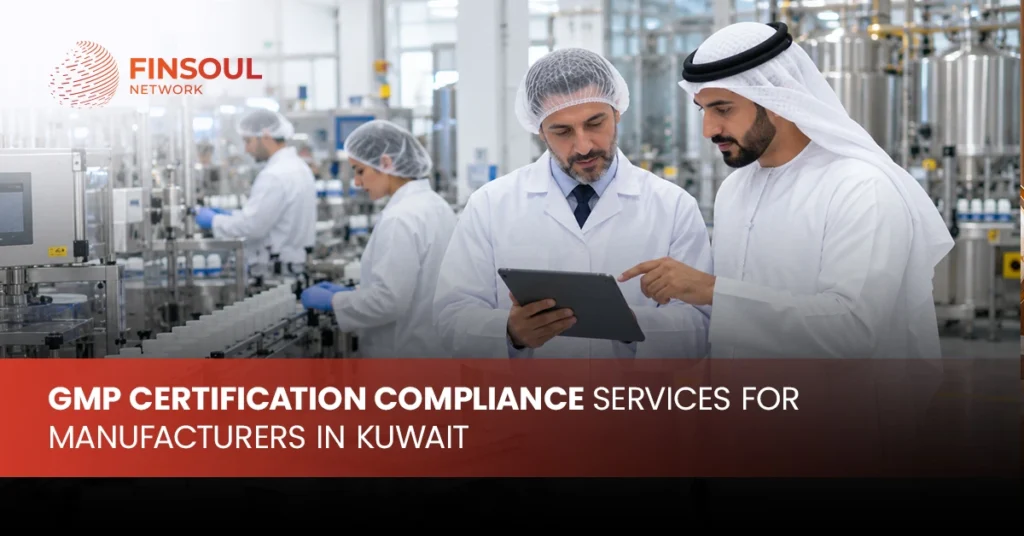
Manufacturers operating in regulated sectors must maintain consistent production, quality control, hygiene and documentation standards. GMP Certification in Kuwait can help demonstrate that manufacturing operations follow recognised Good Manufacturing Practice principles and that the organisation has systems for controlling production and product quality. For companies supplying pharmaceuticals, food products, cosmetics or other regulated goods, preparation for GMP Certification in Kuwait needs to address both operational practices and the documentation that supports them.
Kuwait’s regulatory environment differs according to the type of product and the authority involved. For example, Ministry of Health documentation for pharmaceutical products can require a valid original and legalised GMP certificate that reflects the certified manufacturing lines. The Public Authority for Food and Nutrition also maintains food-control regulations and continues inspection activity at food factories and production sites. This makes practical compliance important rather than treating certification as a document-only exercise. Finsoul Network Kuwait supports businesses with assurance, compliance and operational advisory services relevant to regulated manufacturing.
What Is GMP and Why Does It Matter in Kuwait?
gmp good manufacturing practice refers to a structured approach to manufacturing that controls the conditions under which products are produced, tested, stored, and handled. The objective is to reduce risks such as contamination, mix-ups, inconsistent processes, and inadequate records.
GMP is built around controlled procedures and evidence. A manufacturer should be able to show how employees perform critical activities, how equipment is maintained, how materials are received and released, how production records are completed, and how deviations or quality problems are investigated.
For Kuwait manufacturers, the exact regulatory expectations depend on the product category. Pharmaceutical businesses face health-sector requirements, while food manufacturers are subject to food safety and health controls administered through the relevant authorities. PAFN’s current regulatory information includes food-control and health-licensing regulations, and its recent inspection updates refer to checks covering raw materials, manufacturing, packaging, storage, and good manufacturing practices. This means businesses should define their compliance scope before selecting documentation or certification activities.
Who May Need GMP Certification in Kuwait?
Businesses seeking to become gmp certified should first confirm the certification scope and applicable regulatory requirements. Commonly affected businesses include:
- Pharmaceutical and medicinal product manufacturers
- Food and beverage manufacturers
- Dietary supplement producers
- Cosmetics and personal care manufacturers
- Medical and healthcare product manufacturers
- Contract manufacturing organisations
- Manufacturers preparing products for regulated markets
- Businesses supplying products to distributors or institutional buyers that require quality evidence
Pharmaceutical manufacturers should pay particular attention to documentary evidence. Kuwait Ministry of Health guidance states that a valid original and legalised GMP Certificate may need to reflect the manufacturing lines certified. This is important because a certificate must correspond to the relevant manufacturing activity rather than simply naming a company without sufficient scope.
Key Elements of GMP Compliance
A strong GMP system connects day-to-day manufacturing with documented controls. gmp compliance therefore involves more than preparing a manual for an external assessment. The procedures must be implemented, understood by employees and supported by records.
Premises and Production Areas
Facilities should be appropriate for the activities performed and arranged to reduce contamination, mix-ups and unnecessary movement. Manufacturing areas, storage locations, personnel facilities and material flows should be assessed according to the risks associated with the products.
Personnel and Training
Employees involved in production and quality activities need suitable responsibilities, training and supervision. Training records should show what was covered, who attended and how competency is maintained for relevant duties.
Equipment and Maintenance
Production and testing equipment should be suitable for its intended use. Maintenance, cleaning, calibration and servicing activities should be documented where applicable. Equipment records provide evidence that critical assets remain under control.
Materials and Supplier Controls
Raw materials, packaging materials and other inputs should be identified, received, stored and controlled through defined procedures. Supplier evaluation and material approval processes can help reduce the risk of unsuitable inputs entering production.
Production and Quality Control
Manufacturers need documented production instructions, appropriate in-process checks and final quality controls. Records should provide sufficient evidence to trace how a batch or production run was handled and released.
Deviations, CAPA and Change Control
A mature system should identify deviations, investigate root causes and document corrective and preventive actions. Changes to processes, equipment, materials or documentation should also be assessed and approved through a controlled process.
GMP Documentation Manufacturers Should Prepare
Documentation is one of the most visible parts of a GMP system because auditors and regulators need objective evidence that procedures are followed.Typical documentation can include:
- Quality manuals and policies
- Standard operating procedures
- Manufacturing instructions
- Batch or production records
- Cleaning and sanitation records
- Equipment maintenance and calibration records
- Training records
- Supplier and material records
- Quality control records
- Deviation and investigation reports
- Corrective and preventive action records
- Change-control records
- Complaint and recall procedures
- Internal audit records
The precise documents depend on the industry and scope. A pharmaceutical manufacturer may require substantially different controls from a food producer.
GMP Certification Process in Kuwait
The route to certification or regulatory readiness should begin with an assessment of the existing system. Trying to correct documentation immediately before an audit can leave gaps between written procedures and actual production practices.
1. Define the Scope
Identify the products, manufacturing lines, facilities and processes covered by the programme. For pharmaceutical businesses, the scope should align with relevant manufacturing lines and regulatory documentation.
2. Conduct a Gap Assessment
Review facilities, processes, records, personnel responsibilities and quality controls against applicable requirements.
3. Develop and Implement Documentation
Prepare or revise SOPs, records and quality procedures, then train employees and confirm that the approved system is being followed.
4. Perform Internal Checks
Review the system before an external assessment, document findings and assign corrective actions.
5. Prepare for Certification or Regulatory Review
Confirm the scope, evidence, records and employee responsibilities, then organise the documentation required for the relevant assessment or authority.
What Makes a GMP-Compliant Facility?
A gmp compliant facility is not defined only by having clean production rooms or a certificate displayed on the wall. It is a facility where manufacturing controls, personnel practices, equipment, documentation, quality checks and corrective actions operate together.
The physical environment should support the product and process requirements. Storage conditions, materials, production areas and records should remain under appropriate control.
A facility should also demonstrate how it handles deviations, rejected materials, complaints, equipment failures and process changes through defined investigation and resolution procedures.
GMP for Pharmaceutical Manufacturers in Kuwait
gmp pharmaceuticals requirements can be particularly documentation-intensive because pharmaceutical products are subject to health and safety considerations. Kuwait Ministry of Health documentation for pharmaceutical registration states that a valid original and legalised GMP certificate must be submitted and should reflect the certified manufacturing lines.
Pharmaceutical businesses should therefore review certificate scope, manufacturing activities, product documentation, quality systems and supporting records before submitting regulatory documentation. Depending on the product and application, other technical documents may also be required, so GMP should be treated as one component of the wider regulatory file.
Manufacturers should also maintain a clear relationship between written procedures and actual production. If an SOP describes a process that employees do not follow, the documentation does not provide reliable evidence of control.
Common GMP Mistakes Manufacturers Should Avoid
Several weaknesses can make certification or regulatory review more difficult:
- Treating GMP as a certificate rather than an operating system
- Using generic SOPs that do not reflect actual processes
- Allowing production practices to differ from approved procedures
- Incomplete batch, cleaning or maintenance records
- Weak employee training records
- Failing to investigate deviations properly
- Closing corrective actions without addressing root causes
- Poor control of document revisions
- Failing to define responsibility for quality decisions
- Preparing for an audit without reviewing evidence across the whole system
Conclusion
GMP Certification in Kuwait should be approached as an operational and compliance project rather than a paperwork exercise. Manufacturers need controlled processes, suitable facilities, trained employees, reliable records and documented quality controls that reflect the products they make.
Kuwait’s regulatory authorities continue to monitor regulated manufacturing activities, while sector-specific requirements can determine the evidence a business must provide. Pharmaceutical manufacturers in particular should ensure that GMP certificates and supporting documentation accurately reflect their certified manufacturing lines.
Finsoul Network Kuwait can support manufacturers with assurance, compliance and quality-related advisory work that helps management identify gaps and organise practical improvements. If your organisation is preparing for certification, regulatory review or a major quality-system update, professional support can help bring documentation and operational practices into closer alignment.
Speak to Finsoul Network Kuwait About GMP Compliance
If you are preparing for GMP Certification in Kuwait, start by assessing your current processes, documentation and quality controls. Finsoul Network Kuwait can help you identify gaps, structure the required actions and prepare your organisation for the next stage of its compliance journey.
FAQs
Is GMP certification mandatory for every manufacturer in Kuwait?
Not every manufacturer is subject to the same GMP certification requirement. The applicable obligation depends on the product, activity and relevant authority. Pharmaceutical registration requirements, for example, can specifically require GMP certification documentation, while food businesses operate under PAFN’s food-control and health requirements.
How long does GMP certification preparation take?
The timeframe depends on the facility, documentation, production lines, implementation level and gaps identified.
Can an existing ISO system support GMP preparation?
Yes. An established quality management system can provide useful foundations for document control, internal audits, corrective actions, training and process management. However, ISO certification does not automatically demonstrate that every applicable GMP requirement has been met.
What happens if a GMP assessment identifies non-conformities?
The manufacturer normally needs to investigate the findings, determine appropriate corrective actions and provide evidence that identified issues have been addressed. The required response depends on the assessment or regulatory process involved.